TUI Tours Operational Platform — Internal Logistics ERP (Case Study)
Built a central, trusted operations hub—turning fragmented data into actionable flows so the team could move faster with fewer errors.
Shipped v1 in ~3 months and lifted team productivity by ~50% by unifying data and empowering ops with the right tools—not just another app.
Role
UX & Product Design Consultant @ Softtek EMEA
Client / Context
TUI Group, travel and leisure, EMEA (EU markets)
Timeline
2022–2023
Who might find this case interesting?
Teams selling high-consideration experiences online who need the storefront tightly connected to real-world operations.
Leaders validating “content-as-product” (itineraries, inclusions/exclusions, credibility cues) while handling legacy integrations, multi-market rollouts, and aiming for measurable ops impact.
Teams committed to a Rapid V1, shipping a first working version fast to prove value, de-risk assumptions, and learn with real users before scaling.
Jump to Project's Media and Screenshots ->
Overview
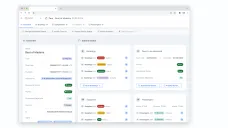
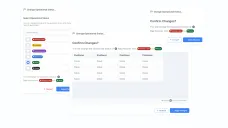
Following the e-commerce discovery, we confirmed what teams already felt: operations lacked a centralized system to coordinate thousands of passengers, vendors, and moving parts. I led the UX/Product Design of a pragmatic internal ERP, focused on data usability, traceability, and a single source of truth—so decisions could be made with confidence.
Strategic Discovery Focus
- Workflows first. We mapped how ops actually worked (assignments, exceptions, confirmations), then shaped the information architecture and permissions to fit reality—not theory.
- Design a tool, not an app. We optimized for throughput, error handling, and state clarity. Faster lists, better filters, dependable status logic—function over chrome.
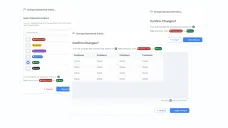
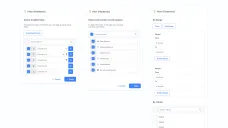
- Let people do their thing. Interfaces supported autonomy—quick edits, bulk actions, and clear audit trails—reducing hand-offs and micromanagement.
- Make data flow. We stitched together disparate sources so updates propagated across departments, removing reconciliation work and disputes over “the latest.”
Project Constraints
- “We needed it yesterday.” Operations demanded immediate value. We adopted agile, incremental delivery to land meaningful capabilities quickly while learning in production.
- Fragmented inputs, high stakes. Many data sources, high passenger volume, and low tolerance for ambiguity required traceability and sensible defaults.
- Avoid over-engineering. We resisted feature bloat; simplicity and reliability beat sophistication that slows people down.
Outcome
- 50% productivity lift for the operations team by centralizing data and simplifying core workflows.
- V1 in ~3 months, from initial requirements to a working platform—speed with purpose.
- Design system overhead near zero. We built with the future in mind, minimizing churn and rework.
- Do more with less. The team managed more passengers with fewer steps, backed by visible, auditable processes.
Notes on my role and collaboration
I led UX/Product Design end-to-end—discovery, content strategy, information architecture, prototyping, usability testing, and stakeholder facilitation—partnering closely with product, engineering, and operations to ensure what we shipped matched how the business actually runs.
These two engagements show the loop between front-stage and back-stage: a compelling purchase journey only works when the operational reality is equally well-designed.
Related case
This platform was a direct continuation of insights uncovered during the TUI Tours E-commerce discovery (the operations gap).